Across the River for Lunch
How national trade fights land in places where the border is part of everyday life


When I was young, my aunts would take my cousin and me into Detroit to see the Christmas window displays at Hudson’s. Afterward we would go through the tunnel to Windsor for lunch. It didn’t feel like entering another country. It just felt like the day continuing somewhere a little different.
For people who live along this border, Canada was never an abstraction. It was where you went for a meal, a visit with friends, a weekend event, or to simply tour through their beautiful gardens. The river connected more than it divided.
That’s why the current political fight over the new Detroit–Windsor crossing feels different here than it does in places far from any international border.
From Washington, it can sound like a negotiation tactic — another move in a trade dispute. On the ground, it’s part of the daily machinery that keeps factories running, stores stocked, and communities connected. In border regions, trade policy isn’t theoretical. It shows up as whether shipments arrive, whether shifts get cut, and whether the routines people have relied on for decades still function.
⸻
The Bridge Isn’t Symbolic to Michigan
The Gordie Howe International Bridge was built to ease congestion and stabilize one of the busiest trade corridors in North America. Auto parts, agricultural goods, and manufactured components cross the Detroit–Windsor route constantly.
Michigan officials from both parties have warned that blocking or delaying the bridge could mean:
higher costs for businesses
less reliable supply chains
increased pressure on existing crossings
and potential job losses
In other words, this isn’t a political trophy.
It’s infrastructure the regional economy depends on.
⸻
How National Strategy Becomes Local Consequence
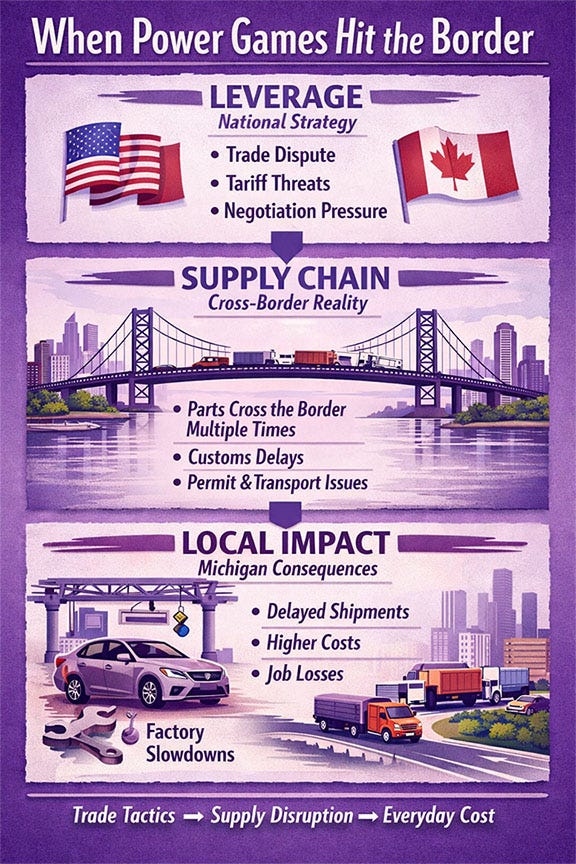
At the national level, infrastructure can become leverage in broader trade disputes.
At the local level, that leverage looks like:
trucks waiting in line
parts arriving late
production schedules breaking
companies absorbing new costs
A decision made at the top moves through systems in the middle and lands on communities at the ground level.
That’s how power actually travels.
Why the Border Matters to Manufacturing
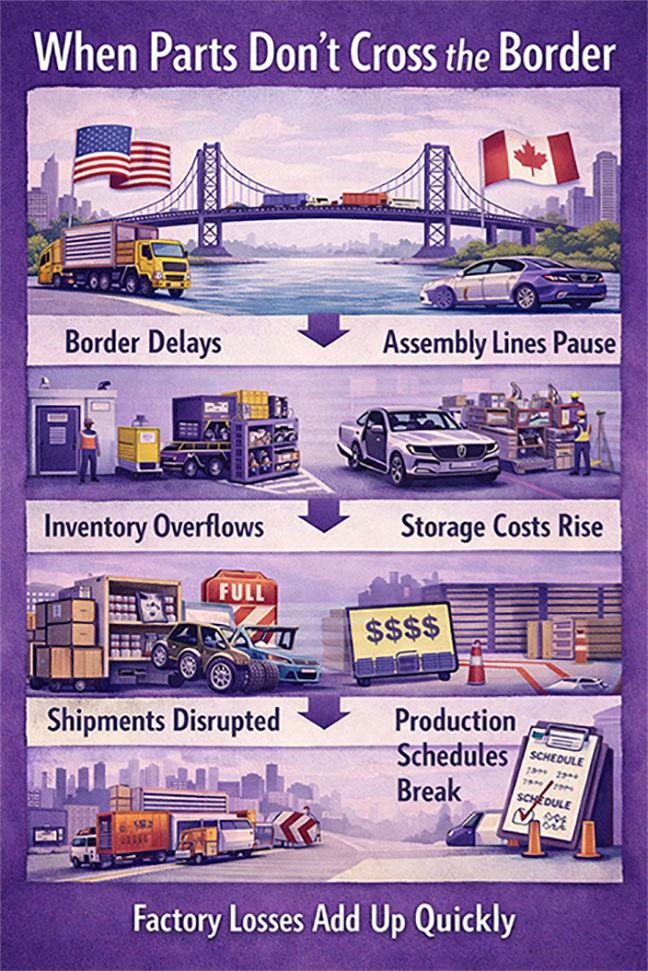
Modern auto production is a shared U.S.–Canada system. Parts often cross the border multiple times before a vehicle is finished.
When crossings slow down:
assembly lines pause
storage costs rise
schedules break
losses accumulate quickly
Interrupt the border, and you interrupt the factory floor,
Why This Feels Personal Here
For many of us in the Great Lakes region, Canada has never felt like an adversary. It’s where relatives came from, where friends still live, and where a simple trip across the river once meant lunch, not leverage.
My own family history touches Canada, and even now I have relatives there. That relationship isn’t theoretical — it’s personal, and it’s shared by many communities along this border.
Whatever happens in the current political fight, that underlying connection hasn’t disappeared.
Canada isn’t just a trading partner here.
Canada is our Neighbor…and Friend.
What Readers Can Do
Pay attention to how national trade disputes affect specific regions.
Notice when infrastructure is discussed as “leverage” rather than as a public utility.
Follow local reporting in border states, where the consequences show up first.
Remember that international relationships are often built on long-standing community ties, not just treaties.
References
Reporting on the Detroit–Windsor crossing and current U.S.–Canada trade tensions
Statements from Michigan officials regarding supply chain and job impacts
Background on North American auto manufacturing supply chains
US-Canada bridge brouhaha deepens as White House says Trump could amend a permit for the project