ICE is in Michigan
Seven law enforcement agencies have joined ICE’s 287(g) program — allowing local police to act as immigration agents. Here’s what it means, who’s involved, and how to protect your rights.

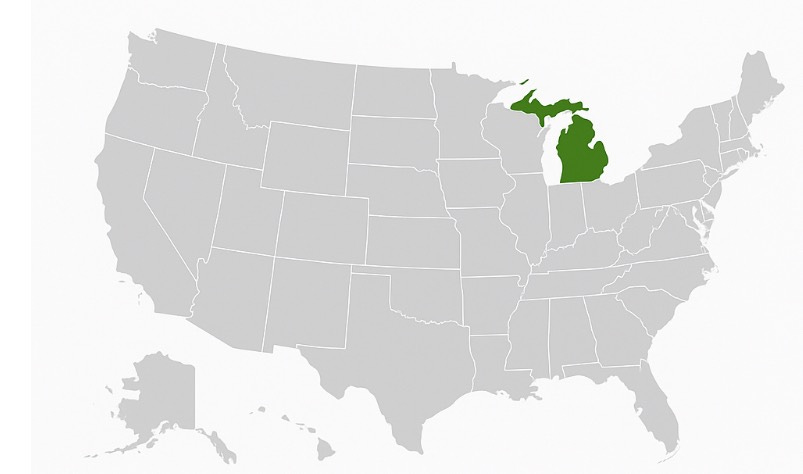
(Map updated May 2025, highlighting Berrien, Calhoun, Crawford, Genesee, Jackson, and Roscommon Counties, and the City of Taylor.)
⚠️ A Quiet Shift in Michigan
Until recently, Michigan had no 287(g) agreements with ICE.
That’s changed. As of this year, six county sheriff’s offices and one city police department have signed formal partnerships with ICE under Section 287(g) of the Immigration and Nationality Act.
These agreements allow local officers and jail staff to perform certain federal immigration duties — from verifying status to detaining people on ICE’s behalf.
Civil rights groups warn this blurs the line between local policing and federal enforcement, leading to racial profiling and fear in immigrant communities.
🧾 Michigan Locations with 287(g) Agreements
As of 2025, seven Michigan law enforcement agencies have formal agreements with ICE under Section 287(g) of the Immigration and Nationality Act.
Counties: Berrien, Calhoun, Crawford, Genesee, Jackson, and Roscommon
City: Taylor (Wayne County)
🏢 Jackson County: A Gateway for ICE Operations
Jackson County’s participation is especially significant. The county already houses one of Michigan’s largest correctional complexes — the State Prison of Southern Michigan and the county jail. Under the 287(g) Warrant Service Officer model, ICE trains jail deputies to identify individuals with immigration detainers and hold them up to 48 hours for pickup. Because Jackson has the facilities, staffing, and administrative systems already in place, it offers ICE a ready-made base of operations inside Michigan’s prison network. What’s described locally as a limited, jail-based program effectively gives ICE a foothold in one of the state’s major incarceration hubs.
⚖️ Two Models, Two Impacts
ICE operates under two main versions of the 287(g) program. Jackson County follows the Warrant Service Officer (WSO) model, which is confined to the jail—deputies there can check immigration status and hold people for ICE pickup after their local cases are resolved. The Task Force model, used by the City of Taylor, goes further: it allows local police officers on patrol to question and detain individuals based on immigration suspicions encountered in daily enforcement. While ICE presents both models as “partnerships,” civil rights groups note that the Task Force version extends federal immigration powers into ordinary policing, heightening the risk of racial profiling and community fear.
These programs operate quietly, often without public debate. That makes it essential for residents to understand what powers local officers do — and don’t — have under these agreements, and what rights every person still holds when faced with ICE enforcement.
💡 Know Your Rights
Attorney Qasim Rashid, Esq. explains the legal distinction clearly:
“Only a judicial warrant allows for someone’s arrest. An ICE detainer is a self-created document — as valid as a stained napkin.
If ICE shows up with only a detainer, you are not legally obligated to go with them.
Only a judicial warrant, signed by a judge, requires compliance.
Regardless, do not speak to ICE for any reason.”
📖 Read Qasim Rashid’s full article on Substack →
📞 Michigan Legal Help
Michigan Immigrant Rights Center (MIRC) — (734) 239-6863
michiganimmigrant.org/immigration-legal-servicesACLU of Michigan — (313) 578-6800
aclumich.org/know-your-rights/immigration-raids
✅ What You Can Do
Ask questions locally. Contact your county sheriff or police chief and ask whether your department has joined a 287(g) partnership. Transparency begins at home.
Call your state legislators and members of Congress. Urge them to oppose local ICE agreements that undermine community trust.
Support legal and advocacy groups. The Michigan Immigrant Rights Center, ACLU of Michigan, and Michigan United offer reliable information and direct assistance.
Share credible reporting. Spread verified sources like Michigan Public, Axios Detroit, and CBS Detroit so others can stay informed.
Know your rights—and help others know theirs. Learn the difference between an ICE detainer and a judicial warrant, and share Qasim Rashid’s guide
so no one faces ICE alone or uninformed.
✳️ Closing Reflection
Michigan’s inclusion in ICE’s 287(g) program marks a quiet but significant shift. It’s a reminder that policies once distant can arrive at our doorstep without much public notice. Qasim Rashid’s advice to “know the difference between an ICE detainer and a judicial warrant” is not just legal guidance — it’s civic self-defense. We can’t build safe communities through fear or confusion. Awareness, transparency, and accountability begin with understanding what’s happening in our own state — and making sure others do, too.
🗂️ References
Michigan Public — “Jackson County Sheriff Department first in Michigan to join ICE” (Apr 7, 2025)
Axios Detroit — “Seven Michigan agencies now partnering with ICE under 287(g)” (June 2025)
CBS Detroit — “Taylor Police Department enters agreement with ICE” (June 2025)
Qasim Rashid, Esq. — How to Protect Your Immigrant Neighbors from ICE Raids
Great background info and advice, especially concerning difference between a detainer and judicial warrant.
So good to know that about them needing a judicial warrant for your arrest. Problem is that ICE goons physically manhandle people and arrest whether they have the legal right or not. I saw it in Gov.Pritzger news conference film! Never touch an ICE officer or they will change you with assaulting a police officer.