Part One: How Power Draws the Map
Gerrymandering and the Fight for Fair Representation

We vote. But someone else draws the lines. And sometimes, those lines make all the difference.
🔍 What Is Gerrymandering?
Gerrymandering is the manipulation of voting district boundaries to benefit a political party, racial group, or incumbent. It’s named after Elbridge Gerry, a Massachusetts governor whose 1812 district map looked like a salamander—hence, "Gerry-mander."
At its core, gerrymandering is about control. It lets politicians choose their voters, instead of the other way around.
🧰 How It Works
Two core tactics:
Cracking: Diluting the power of opposition voters by spreading them thinly across many districts.
Packing: Concentrating opposition voters into a few districts so their influence is limited elsewhere.
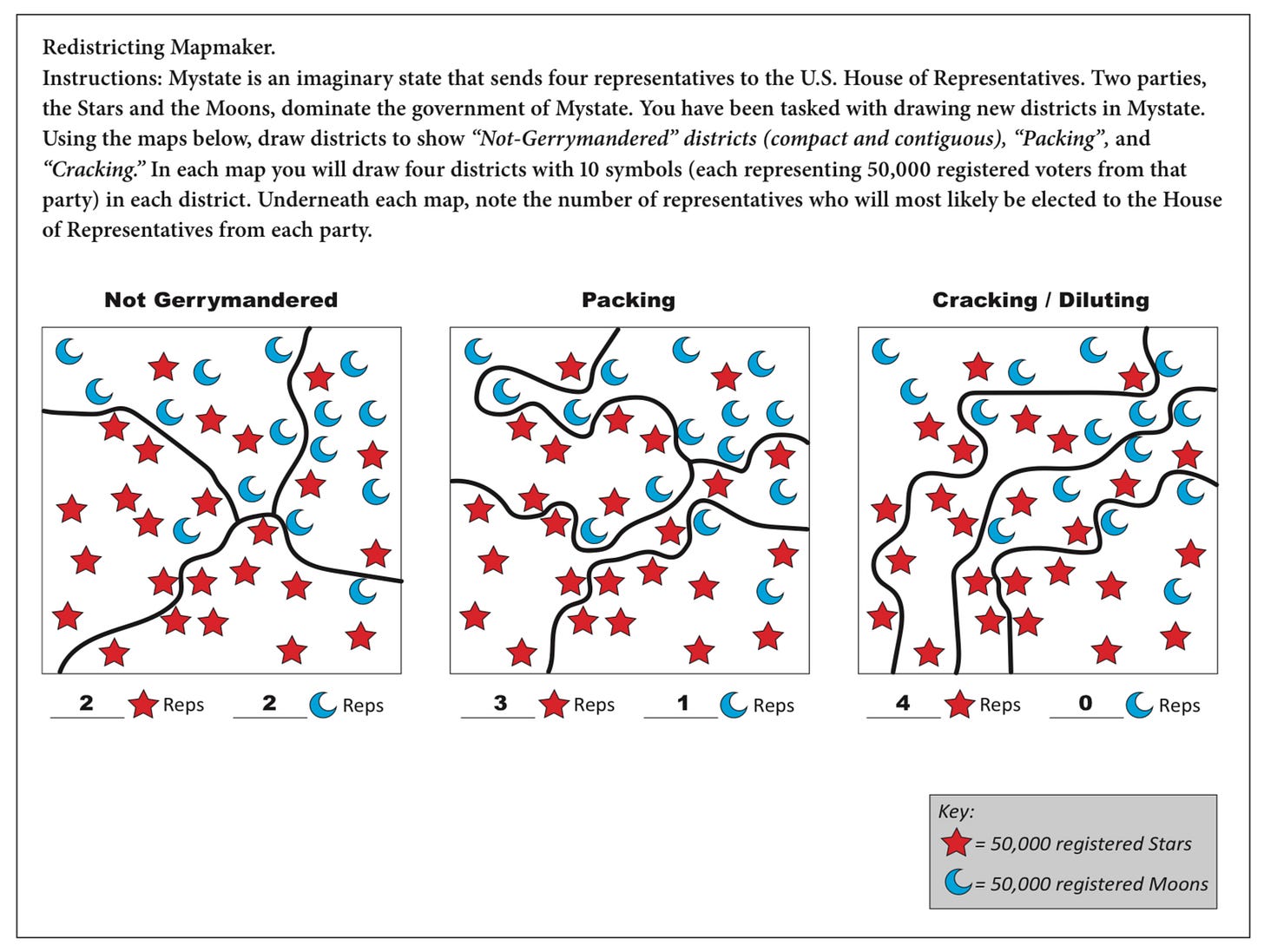
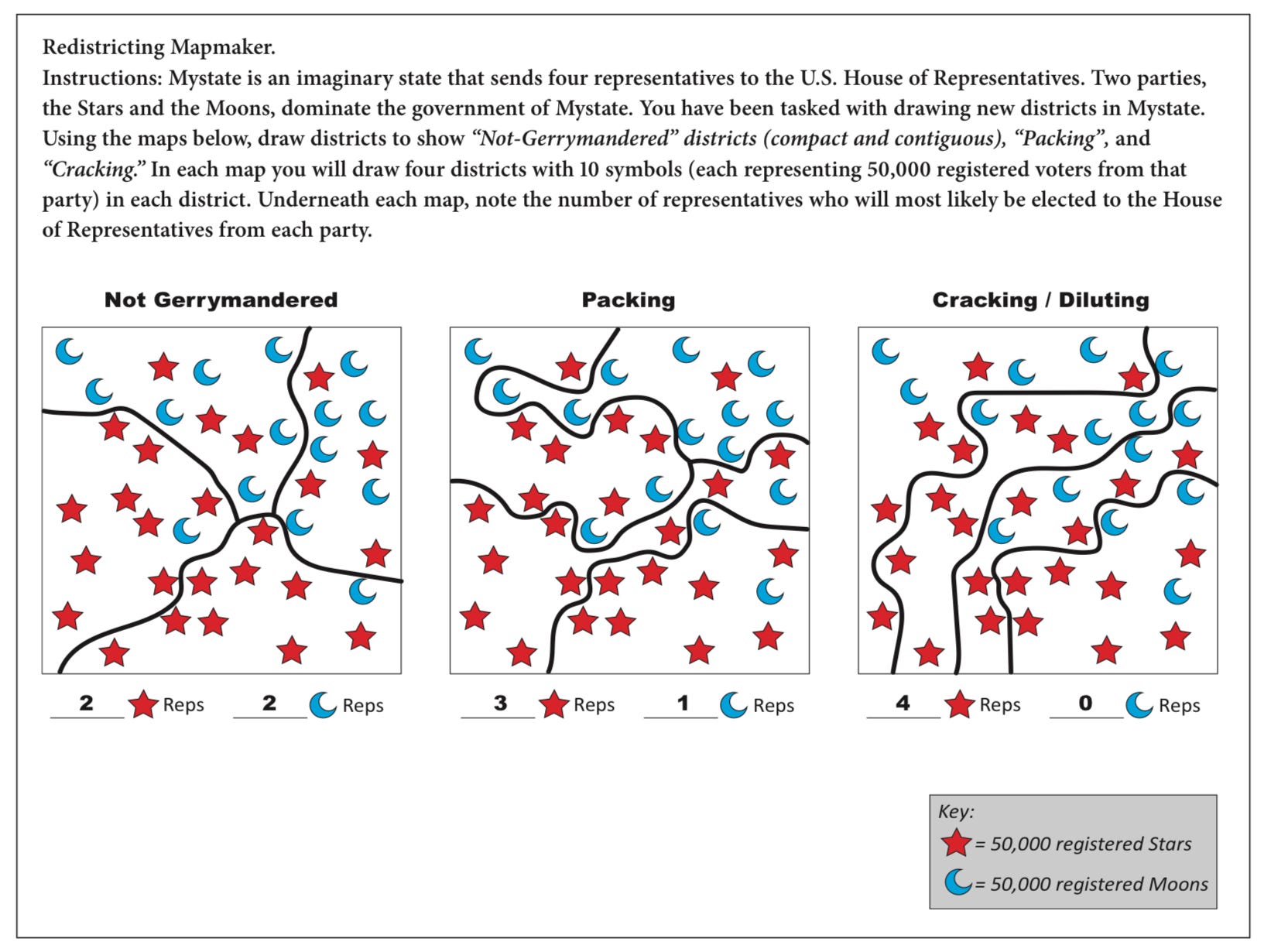
Together, these tactics waste votes and silence opposition.
🔗 Brennan Center - Gerrymandering Explained
🧨 Why It’s a Threat to Democracy
Disproportionate outcomes: In 2018, Democrats won more than 50% of the vote in Wisconsin’s Assembly races but took just 36% of the seats.
Voter disillusionment: When outcomes are predetermined, turnout drops.
Extremism grows: With safe seats, politicians worry more about primary challengers than general elections—fueling polarization.
Communities are divided: Gerrymandering often splits neighborhoods or racial groups to dilute their voting strength.
⚖️ What the Courts Say
Racial gerrymandering is unconstitutional under the 14th Amendment and the Voting Rights Act.
Partisan gerrymandering is not prohibited by the federal courts.
In Rucho v. Common Cause (2019), the Supreme Court ruled that partisan gerrymandering is a “political question” beyond the reach of federal judges—even if it's extreme.
🔗 SCOTUS Blog: Rucho v. Common Cause
🛠️ What Can Be Done
🧭 1. Independent Redistricting Commissions
These nonpartisan bodies take map-making out of lawmakers’ hands. States like California, Arizona, and Michigan use commissions that have led to fairer maps and greater public trust.
🔗 Bridge: Michigan uses a citizen-redistricting-commission which led to fairer maps
📣 2. Public Legal Challenges
Groups like:
…have filed lawsuits in North Carolina, New Mexico, and Pennsylvania, where state constitutions prohibit partisan gerrymandering.
✏️ 3. Ballot Initiatives
In states that allow citizen-led proposals, voters have taken redistricting reform into their own hands:
• Michigan’s Proposal 2 (2018) created an independent commission via grassroots organizing.
• Colorado and Ohio passed reforms by popular vote.
🔗 The Ballot Initiative Strategy Center
🏛️ 4. Federal Reform (Stalled—for now)
The Freedom to Vote Act would:
Ban extreme gerrymanders
Set national redistricting standards
Require transparency in the process
But it's blocked by the Senate filibuster—meaning no action without 60 votes.
🔗John Lewis Voting Rights Act Brennan center
🗳️ 5. State-Level Pressure
When federal help stalls, the fight moves to state capitals:
Push for public map-drawing portals
Demand map transparency and public hearings
Fight for clear redistricting criteria/
✅ What’s Working
Michigan’s Independent Commission received praise for transparency, citizen participation, and more competitive districts.
North Carolina’s state courts have occasionally struck down maps, though outcomes can shift depending on who sits on the bench.
In California, fairer maps have encouraged more competitive elections—making officials more accountable.
🧭 Would Ending the Electoral College Fix Gerrymandering?
Short answer: No.
But it would fix a different distortion in our democracy.
The Electoral College affects presidential elections. Gerrymandering affects congressional, state, and local elections. Both can override the will of the majority, but they operate in different ways.
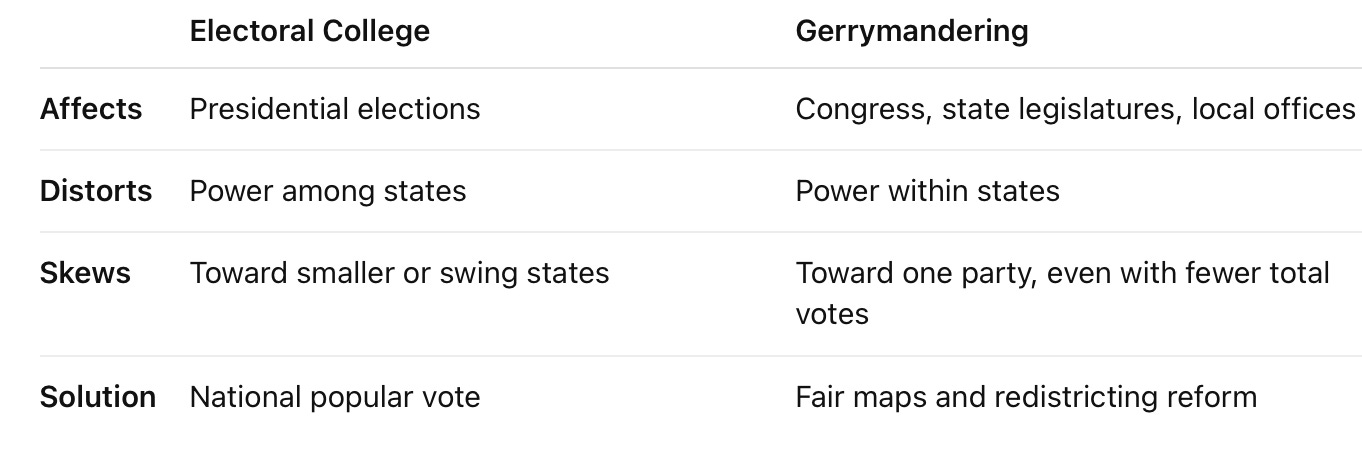
Abolishing the Electoral College—through a constitutional amendment or the National Popular Vote Interstate Compact—would make every vote count equally in presidential races. That’s important. But it wouldn’t stop state legislatures from:
Drawing unfair congressional districts
Silencing communities with cracked or packed maps
Passing voter suppression laws from gerrymandered strongholds
That’s why we need both:
Electoral reform at the national level
Redistricting reform at the state level
The system is multilayered. So is the fix.
✅ What You Can Do About Gerrymandering
It’s not just about maps. It’s about voice, power, and who gets to count.
Here are some steps you can take—wherever you live:
1. Know Your Map
Use tools like Dave’s Redistricting App or All About Redistricting to view your district.
Ask: Is it oddly shaped? Does it split communities?
2. Find Out Who Drew It
Some states use independent commissions, others let politicians draw the lines. Know your state’s method.
3. Support Reform in Your State
Advocate for independent commissions, public hearings, and fair criteria.
Groups like Common Cause, League of Women Voters, and RepresentUs can help.
4. Join Legal Challenges or Testify
Share your story at redistricting hearings or support lawsuits challenging unfair maps.
5. Pressure Congress
Call your senators to support the Freedom to Vote Act and the John R. Lewis Voting Rights Advancement Act.
6. Talk About It
Gerrymandering thrives in silence. Share what you learn with others—online, in your community, and with your family.
The lines shape your future. You should help shape the lines.
Coming soon:
Part Two: The Electoral College: The other map that distorts democracy
I saw a cartoon by Micheal deAdder that explained gerrymandering so clearly but I wasn’t sure I could use it….but I found another that worked just fine in an article i referenced.
Great information and love how you give practical suggestions on what voters can do!!